
What to Do About Your Locks and Keys After a Break-In
TXP Locksmith Team
After a break-in, it can be difficult to know whether your house is secure enough for the night. The door may be damaged, the lock may still turn, and you are standing there trying to work out what has to happen right now and what can wait until morning.
Two things cannot wait. Nobody should be able to walk back in tonight, and you need to know whether any keys left the house with them. Permanent door and frame repairs can usually wait until the damage has been documented and the house is secure.
This covers the break-in that succeeded and the attempt that did not, because the damage and the decisions are different in each case. We know this is not a calm evening for anyone, so the sections below are in the order the work actually needs doing.
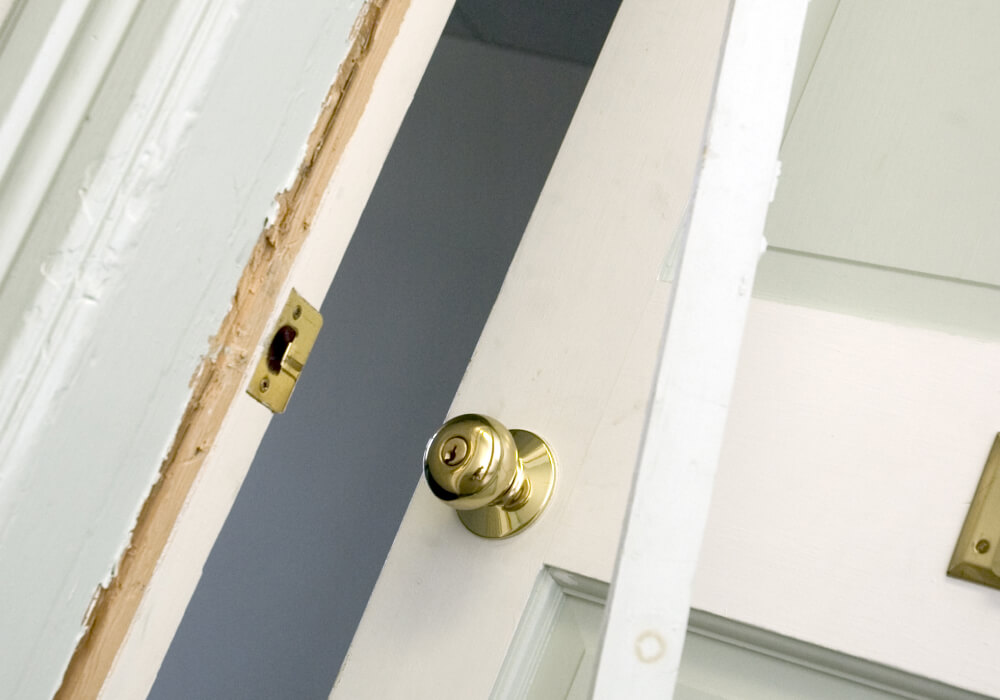
Before you touch anything, do these five things
Before you clean or move anything, give the police an opportunity to inspect the property and document what happened. Most people tidy up first, because a wrecked door in your own hallway is hard to look at, and the photographs the police and the insurer needed are gone by the time anyone asks for them. None of this takes long.
- Do not walk through the house if you are not certain it is empty: wait outside, or at a neighbor’s, until the police have been in. The locks can be handled afterward, and there is nothing in the house worth walking in on somebody for.
- Call the police before you clean anything: you will want the report number for the insurer, and adding a report days later is much harder than making one now.
- Photograph everything before it is moved, cleaned or repaired. The next section explains what to include.
- Keep the damaged hardware: if a lock, strike plate or handle comes off, put the old parts in a bag rather than the trash. Some insurers ask to see them.
- Do not start buying replacement locks yet: until you know which keys are missing, you do not know how many doors need attention, and rushing this is how people end up paying for the front door twice. Rekeying is a different thing, and that may well need doing tonight.
What to photograph, and why it matters later
Two people are going to ask what that door looked like: an officer writing a report, and an adjuster who was never there. Neither of them can go back and look, so the photographs have to do it for them.
- The whole door from a few steps back: this shows how the door sits in the frame and whether it is still square in the opening.
- The jamb and the strike plate: photograph the area where the bolt enters the frame, including split wood, loose hardware and screws that have pulled out.
- The bolt or latch itself: photograph it thrown and retracted, if it still moves at all.
- The face of the lock and any marks on it: scratches, gouges, damage around the keyway or a broken cylinder can show whether the lock itself was attacked.
- Both sides of the door: inside as well as out, because damage to the inside of a frame is easy to miss later.
- The entry point if it was not the door: a window, a slider, the garage, a gate.
- Anything disturbed inside: drawers, closets, and the spot where bags or keys usually sit.
- A slow video walk through the house: this picks up everything you did not think to photograph, and it takes a minute.
If the police are coming back to take prints, ask which surfaces to leave alone before you start moving around.
Securing the house tonight is a different job from repairing it
Securing the house for the night and completing the permanent repair are not always the same job. It helps to be clear about which one is happening tonight.
Securing the house means the door closes, latches and locks, and that no key which might now be in someone else’s hands opens anything. In practice that is a rekey, which means changing the pins inside the existing lock so the old keys stop working, or a new cylinder where the old one is damaged. It usually also means refixing or replacing the strike and getting the bolt to throw properly again. That much can normally be done in one visit.
Repairing the door properly is a bigger piece of work. It means the frame is sound, the door is straight, and the hardware suits the door it is installed on. A split jamb, a bowed door or a frame that has to be rebuilt is carpentry, usually in daylight and sometimes with material that has to be ordered.
The reason the distinction matters is that a door which latches is not automatically a door that would hold against a second attempt. If the jamb is split, the new lock is only as strong as the wood it lands in. Ask what has been made secure and what is still outstanding before anyone leaves, so nothing is assumed on either side.
If the door cannot be made to lock at all tonight, it is far better to hear that at nine in the evening than at midnight. A ground floor door that cannot be secured is a fair reason to sleep somewhere else, and that is much easier to arrange early.
What actually happens when a locksmith comes out
Most people have never had to call one, so it helps to know what the visit looks like before it happens.
It starts with the door rather than the lock. Whoever comes out will look at how the door sits in the frame, where the force went, whether the bolt still lines up with the strike, and whether the wood behind the strike is sound. That assessment is what decides everything after it, and it is worth watching, because it is also the moment to ask questions.
From there it is usually one of three outcomes. The lock is rekeyed and the door goes back to working the way it did. The lock is replaced, because the cylinder or the bolt took the damage. Or the door is made to close and lock tonight while the frame is repaired properly another day.
Have your key list ready when they arrive. If a key is unaccounted for, the question is not only which door was forced, it is which doors that key opens, and that changes what can be finished in the same visit. The locksmith can explain what can be completed during the first visit and whether the door or frame will need additional repair.
Work out which keys are gone, and what each one opens
This is the question that decides the size of the job, and it is the one people answer too quickly. A broken door is a repair. A missing key is a rekey of everything that key opened, and the missing key, not the broken door, sets the timeline.
Go and physically look at each of these rather than picturing where it normally lives.
- The house spare: check it carefully, because it is often kept near an entrance and may be labeled.
- A spare kept in a vehicle: if a car was on the driveway or the garage was reached, check the glove box and the center console.
- The garage door remote: clipped to a visor or sitting on a shelf. A remote is a key, even though it does not look like one.
- The mail or community box key: small, easy to overlook, and the one people notice is missing weeks later.
- Gate, side gate and shed keys: the shed matters more than it sounds, because a shed holds the tools that make a second attempt easier.
- Keys held by other people: a neighbor, a cleaner, a dog walker, a contractor, a family member or a former tenant. Ask them rather than assuming theirs is where it should be.
- Anything in a bag, coat or car that was taken: the keys go wherever the bag went.
If every key is accounted for and the hardware is sound, this is a door repair. If one cannot be found, write down every lock it opened before deciding anything, because that list is the job.
There is one more thing worth saying plainly. If somebody was inside the house, they had access to every key hanging in it, and there is no way to establish afterward whether a key was picked up, looked at or copied while they were there. That is the reason people rekey a door that still opens perfectly well.
Keys are only half of it on a door with a keypad or a smart lock. Change the entry code as well, and delete any code you do not recognize or no longer need, including ones given out to a cleaner, a contractor or somebody who used to live there. If the lock uses an app, review its users and shared access as well. Remove unfamiliar accounts, revoke temporary access, and change the account password if the phone or login information may have been exposed.
If a key was taken with something showing where you live
A missing key becomes a more immediate concern when it was taken with something showing your name or address, and that is the version to treat as tonight’s job rather than this week’s.
The common one is a purse, wallet or bag that held keys along with mail, a checkbook, an ID or a delivery label. The other is a car taken with a garage remote inside it, because the registration in the glove box carries the address and the remote opens the garage. In that case the door between the garage and the house is the one to address first, since it is often the lightest exterior door on the property and sometimes has only a knob lock on it. Rental and student housing keys bring a third version, where the key itself is on a tag or fob printed with an address or an apartment number.
If the keys are gone but nothing identifying went with them, the risk is lower and it is still worth rekeying. There is no way to establish where those keys ended up, and rekeying removes the question instead of leaving it open.
What actually gets damaged when a door is forced
It helps to know where force goes, because the lock is usually the last thing it reaches. A kicked or pried door fails at the frame first. Short screws pull out of soft wood, the strike plate tears loose, and the jamb splits along the grain. After that the bolt or latch can bend and the hinges can pull. The cylinder is frequently untouched, which is exactly why a lock that still turns tells you very little about whether the door is secure.
The opposite happens too. Where the lock itself was attacked, snapped, drilled or punched out, the door and the frame can be perfectly sound while the hardware is finished.
Signs the door needs attention even though it closes:
- It will not latch unless you lift or push it: the door has dropped or the frame has moved, so the bolt no longer lines up with the strike.
- The bolt drags or will not throw fully: something is bent, or the strike has shifted enough to catch it.
- Screws are protruding from the frame: they have been pulled part of the way out, and whatever they hold is no longer properly held.
- The jamb moves when you press it: the wood has split behind the surface, which is common and easy to miss.
- There is new daylight along the edge of the door: the door or the frame is no longer straight.
- The deadbolt turns but feels loose in the door: the cylinder or the fixings behind it may have been disturbed.
- The key now turns roughly or sticks: something inside the lock has been damaged, and that happens whether or not they got in.
If they tried and did not get in
An attempt is not a smaller version of a break-in as far as the hardware is concerned. The same force went into the same door. It stopped short, sometimes because the lock held and sometimes because something interrupted them, and what it left behind is still damage.
- The lock that took the force: a deadbolt that held can still have a bent bolt or a distorted cylinder inside it. It may work normally now and give trouble later, so it is worth having looked at rather than assumed to be fine.
- The wood behind the strike: the jamb can be split behind the paint with nothing visible from the outside. Press it, and check whether the strike plate still sits flat against the frame.
- The door itself: a slab that has been bowed or twisted usually shows up as a door that suddenly needs a shove before it will latch.
- The rest of the perimeter: an attempt at one door often follows an unsuccessful look at a window, a slider or a shed. Walk around the property in daylight and check the other openings.
- Whether a key is involved at all: if a key is unaccounted for as well, the attempt and the missing key are worth thinking about together rather than separately.
An attempt is worth taking seriously because the hardware has now been tested. Repairing what was damaged is the first half of it. The second is asking whether the lock and the strike were ever a match for that door, and that is a reasonable question to put to whoever comes out to fix it.
The doors and locks nobody checks afterward
All the attention goes to the door that was forced. The rest of the house is worth ten minutes.
- The garage-to-house door: often lighter than every other exterior door, sometimes only a knob lock, and frequently on the same key as the front door.
- The back door and any side door: usually less visible from the street, which is exactly why they matter.
- The patio slider: check that its latch, track and any secondary lock still work properly and show no signs of movement or damage.
- Gates and the shed: both are ways of reaching the back of the house unseen, and both are usually secured with the lightest hardware you own.
- Anything keyed alike with a key that is now missing: having one key for four doors is convenient, and it also means one missing key opens four doors.
- Windows: check they all still lock. Window latches are not locksmith hardware in most homes, so a forced or broken window goes to a window company or a glazier.
Rekey or replace, and how to tell which you need
Rekeying is the answer when the lock is sound, it turns smoothly, and the real problem is who might be holding a key. The pins inside the cylinder are changed so the old keys no longer work, and the hardware stays on the door. It is also how several doors get brought onto a single key.
Replacing is the answer when the hardware itself is damaged, worn, or lighter than the door deserves, and when you want something the current lock cannot do, such as a deadbolt on a door that only has a knob.
The two mix more often than people expect. A forced front door may need new hardware while an untouched back door only needs rekeying, and both can still finish on the same key if that is how the house worked before. It is a decision worth making at the doors themselves rather than in a hardware aisle.
If you rent
If you rent, contact the landlord or property manager and check your lease before authorizing permanent lock changes.
- Put it in writing as well as by phone: they normally have to approve the work, and they will often arrange it themselves.
- If the door cannot be locked, say so directly: tell the landlord or property manager that the property cannot currently be secured, and ask how they want the emergency work arranged. Keep the paperwork and the receipts.
- Ask who else holds keys: previous tenants, contractors, a maintenance team and the management office may all have copies, and a break-in is a fair moment to ask for that to be updated.
- Ask for any rekey in writing too: so what was done, and when, is on record for both of you.
Expert tip:
when the strike plate goes back on, ask for long screws that reach the framing behind the door casing rather than the short ones that come in the box. Most forced doors fail at the frame rather than at the lock, and this is the smallest change that makes a difference to that.
Who handles which part
After a break-in you end up dealing with several different people, and nobody explains who owns what. Roughly, it splits like this.
- The police: the report and the report number. Make the report even if nothing was taken and even if they did not get in.
- Your insurer: the claim and, almost always, the photographs. Keep receipts for anything spent making the property secure.
- The locksmith: locks, cylinders, keys, rekeying, strike plates, and reinforcing the area the bolt lands in.
- A carpenter: a split jamb, a cracked or bowed door, and any frame that has to be rebuilt.
- A glazier or window company: broken glass, forced windows and slider repairs.
- The alarm company: an alarm that was triggered, bypassed, or that stayed silent when it should not have.
The overlap that surprises people is the frame. A locksmith may be able to restore the lock and reinforce the strike area, but extensive damage to the jamb, door or frame may require a carpenter. If both are true of your door, it is much better to be told that on the first visit than to find out when the door fails a second time.
What to do next
If a key is unaccounted for, or the door no longer locks the way it should, that part should not wait for the rest of the repair. TXP Locksmith rekeys locks and repairs door hardware after break-ins and attempted break-ins. The technician will explain what can be completed during the initial visit and whether the door or frame needs additional work. Call (800) 928-9129 and say what the door is doing and which keys you cannot find, because those two answers decide what needs to come out on the truck. You can also see how a residential locksmith in Dallas handles rekeys and door repairs.
Frequently Asked Questions
Should I change the locks after a burglary, or is rekeying enough?
Rekeying is enough in most cases and it is usually the right answer. It changes the pins inside the cylinder so any key that is out there stops working, while the hardware you already own stays on the door. Replacing the lock only becomes necessary when the hardware itself was damaged, is worn, or is too light for the door it is on. The one case worth thinking about differently is a door that has now been forced once, because that is a fair moment to look at whether the lock and the strike were ever a match for it.
The police told me not to touch anything. Can I still get the door secured tonight?
Ask the officer when the scene is released, which is often before they leave. Once it is, photograph everything first and then have the lock work done. If they are coming back to take prints, say so when you call, because the work can be staged around a specific area and the permanent repair done afterward. TXP Locksmith can secure a door in stages when part of it has to be left alone.
They tried and did not get in, and the lock still works. Is there anything to do?
There usually is. Force goes into the frame and the strike before it reaches the lock, so the wood can be split behind the paint while everything still opens and closes normally. A bolt that took a hit can also be bent enough to give trouble later without feeling wrong today. Check whether the door latches without being lifted, whether the strike plate still sits flat, and whether the key turns as smoothly as it did before.
They came in through a window rather than a door. Do the locks matter at all?
The entry point matters less than what left the house. Somebody who was inside had access to every key hanging in it, so go through the key list before deciding the locks are fine. The window itself is a different trade, and a window company or glazier is the right call for a forced or broken one.
My spare key is missing and I am not sure it was ever there. Should I rekey anyway?
There is no way to prove a key is not out there, and that is usually the part people are still thinking about weeks later. Rekeying settles it in one visit and leaves the hardware in place, which is why it is the usual answer when a key cannot be accounted for. TXP Locksmith can go through what each missing key actually opens before anything gets changed.