
How Can I Get Into My Elderly Parent’s House in an Emergency?
TXP Locksmith Team
Your parent lives alone, you live across town, and the only spare key sits in a kitchen drawer inside the house. That is easy to fix on an ordinary visit, long before anyone needs it.
To get into an elderly parent’s house in an emergency, the family needs a key or code that opens every lock on one agreed door. A spare key may open the deadbolt and still leave you stuck behind a chain or a second lock. This guide shows you how to check the doors, choose a way in, test it, and keep it working as things change. If your parent is ever in immediate danger, call 911 rather than waiting for a locksmith.
Start by walking the route into the home
Before you pick a lockbox or a keypad, walk from the street to your parent’s door. Note every gate, door and lock on the way. Most homes have more than one lock to get past, and these are the ones to look for.
- The gate or building entrance: a community gate, a building door or a side yard gate may need its own code or key.
- The door the family would actually use: this may be the garage entry or back door rather than the front.
- Every lock on that door: many doors have a knob lock and a deadbolt, and some have a second deadbolt that nobody has used in years.
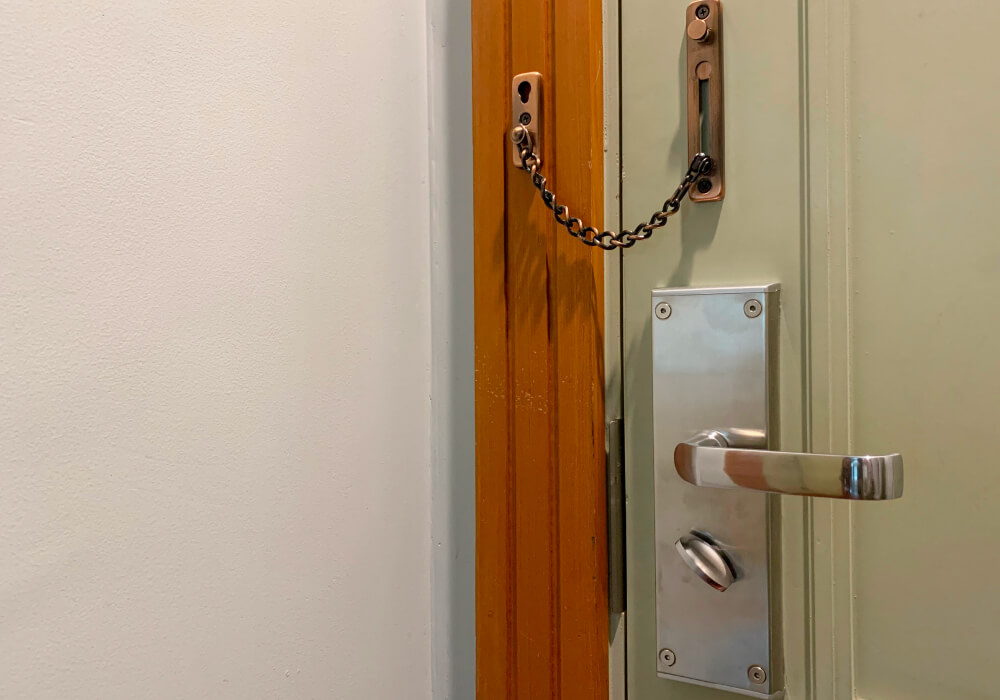
- Anything fitted on the inside: a chain, a swing bar or a slide bolt.
- Where the keys are now: how many exist and who holds them.
Locks that keep family out as well
Some locks only work from inside the house, so a key or code from outside will not open them. Your parent may still want them for peace of mind at night. The family just needs to know they are there and plan around them.
- A chain or swing bar: the door opens a few inches and the chain stops it. Unlocking a smart lock from your phone does not release it either.
- A deadbolt that needs a key on the inside: family can still open it from outside with a key, but your parent needs the inside key to get out. Have the lock checked so your parent can get out easily before you rely on it.
- A slide bolt or other inside-only latch: like a chain, nothing from outside will open it.
- A second deadbolt with no spare key: if your parent locks it at night, the family’s spare key opens only one of the two locks.
A spare key, lockbox or smart lock cannot open these locks, so the answer may mean changing the hardware. A locksmith can look at the door with you and suggest options. If your parent rents or lives in a managed community, check with the landlord or management before changing any lock.
Choosing how the family will get in
Once you know what is on the door, decide how family members will get past it. The choice depends on how independent your parent is, how far away the family lives, and how comfortable your parent is with technology. For each option, think about what happens if the key holder is away, the batteries run down or the internet goes out.
- A spare key with a trusted neighbor: the simplest option, as long as the neighbor is usually home and easy to reach.
- A key lockbox with a code: a sturdy, securely mounted box holds a spare key. Share the code only with people your parent agrees to. Do not assume responders have the code, and confirm how it would be given to them.
- A keypad deadbolt: your parent does not need a key, and many models give each person their own code. If the batteries run down, some models open with a backup key and others accept temporary power from outside so an authorized code can still be used.
- A smart lock you can open from your phone: useful when family lives far away. It needs a working internet connection to open remotely, though many still work from the keypad when the internet is down.
Agree on the choice with your parent, including who may use it and when.
Test the plan before you rely on it
Test the plan once with your parent at home, using the same door, key and code the family would use. Testing gives you time to fix problems before the arrangement is needed. Check each of these.
- Try the spare key from outside: have someone stay inside while the key holder opens every lock on the agreed door.
- Test the nighttime setup: lock the door the way your parent does at bedtime, then check what still opens from outside.
- Check the route to the door: make sure the key holder can get through the gate or building entrance too.
- Use the keypad or lockbox yourself: each person with a code should try it once.
- Confirm the backup: know what happens if the neighbor is away or remote unlocking does not respond.
Can the locks on the agreed entry use one key?
Older homes often have a different key for every door, and some of those keys are worn or lost. If the locks are compatible, a locksmith can rekey the locks on the agreed door so one key opens them all. Other doors can be added if you want, and the existing locks can usually stay. If one lock has no key at all, the locksmith can check it during the same visit and can often cut a key without the original.
When the locks are hard on older hands
Make sure your parent can lock and unlock the door easily from both sides. A stiff bolt, a small thumbturn or a hard-to-grip handle is worth fixing before you add a keypad or hand out spare keys.
- A deadbolt that is stiff to turn: the door may be out of line, the bolt may be catching on the frame, or the lock may be worn. Have it checked before replacing anything.
- A small thumbturn: a larger thumbturn is easier for hands with arthritis to grip.
- Round knobs: a lever handle opens with a push down, which is easier when grip strength is low.
- A key that is hard to turn: check both the key and the lock before deciding whether a replacement key will help.
Keeping track as helpers change
Over time, more people may need a way in, such as a home health aide, a cleaner or a neighbor who checks in. Keep a written list of who has a key or code. If the lock allows it, give each person their own code, so you can remove one without changing everyone else’s. Review the arrangement after a lock is changed, a caregiver changes or a spare key is replaced, and test it again.
If a key goes missing, our guide to deciding whether a lost house key means rekeying walks through the questions that decide it.
What to do next
TXP Locksmith cuts spare keys, rekeys compatible locks to one key, and installs keypad deadbolts. A residential locksmith can walk the doors with you and your parent and suggest options for each door. Call (800) 928-9129 and tell us which doors the home has, what locks are on them, and who needs a way in.
Frequently Asked Questions
Will a locksmith open my parent's house if my name is not on it?
Being a son or daughter is not, on its own, permission to enter. When you call TXP Locksmith, say the home is your parent’s and ask what is needed. If you think your parent needs help, call 911 instead.
Emergency responders had to force the door. What happens now?
The door still needs to lock before the house is left empty. TXP Locksmith can assess the damaged door and explain what can be secured or replaced. A badly damaged frame may need a carpenter first.
My parent keeps forgetting the keypad code. What can we do?
First check whether a keypad suits your parent. Try it together a few times, and keep a dependable backup such as a key with a neighbor. If the code still does not stick, a different option may work better.
Can a lockbox go up without changing the lock?
Yes, a key lockbox holds an ordinary key, so the lock stays the same. It should only go up with your parent’s permission, and in a rented home or managed community, the landlord or management may need to approve it.